


The Science of Purring: Why Do Cats Purr and What Does It Mean?
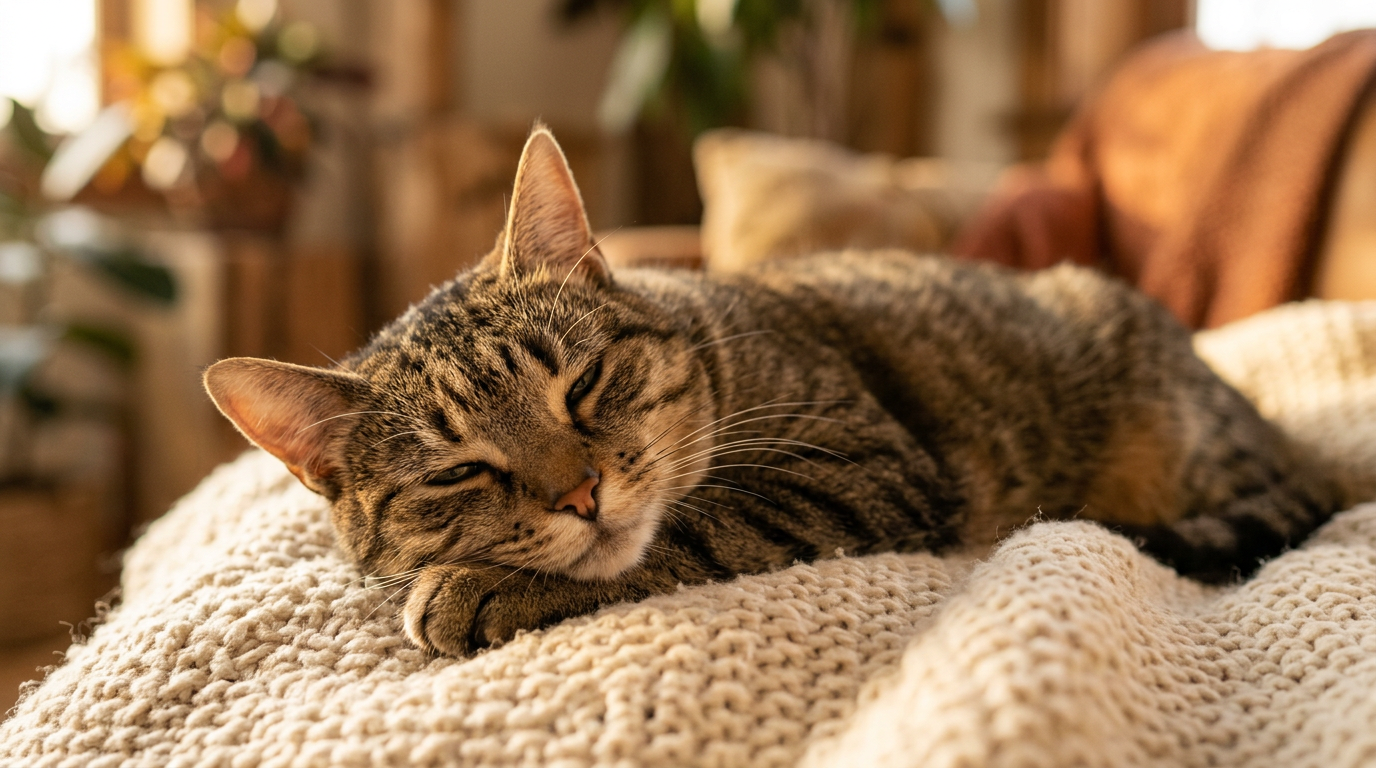
There's a sound that every cat owner knows intimately. It starts as a low rumble in your cat's chest, vibrating through their body and into your lap. It's the sound of contentedness itself — or so we've always believed. But why do cats purr? For decades, the answer seemed obvious: cats purr when they're happy. End of story. Yet as science digs deeper, the truth about purring turns out to be far more complex, more fascinating, and frankly, more magical than anyone expected.
The Mechanics: How Purring Actually Works
Before we explore the why, let's understand the how. Unlike meowing — which involves the vocal cords in a straightforward way — purring is produced by rapid, rhythmic contractions of the laryngeal muscles in the throat, combined with the diaphragm. These muscles flutter at a frequency of 25–150 vibrations per second, creating the continuous rumbling sound we know and love. What makes purring unique is that cats can do it while both inhaling and exhaling, which is why the sound feels so continuous and hypnotic.
Beyond Happiness: The Surprising Science of Cat Purring Benefits
Here's where things get extraordinary. In the early 2000s, veterinary researchers began noticing something puzzling: cats often purr when they're injured, in labor, or even dying. A cat at the vet with a broken leg will purr. A cat giving birth will purr between contractions. This couldn't be happiness — so what was going on?
The answer sent shockwaves through veterinary science: the frequency of a cat's purr — 25–150 Hz — falls within a therapeutic range known to promote tissue regeneration. Studies have shown that sound frequencies in the 25–50 Hz range can improve bone density and promote healing. Frequencies around 100 Hz are used in therapeutic devices to treat pain and swelling. Cats, it turns out, may be self-medicating. The purr is a low-energy mechanism that stimulates muscles and bones without expending significant calories — essentially a built-in physical therapy system.
The Communication Puzzle
Of course, cats also purr for social reasons. A mother cat purrs to guide her blind, deaf newborn kittens to her body for warmth and nursing. Kittens begin purring back within days. It's the first communication bridge between mother and offspring — a signal that says "I'm here, I'm safe, I'm content." When your adult cat purrs on your lap, they're using the same communication channel they used with their mother. You're family.
The "Solicitation Purr": When Purring Becomes Manipulation
Researchers at the University of Sussex made a fascinating discovery: cats have developed a specific type of purr for manipulating humans. The "solicitation purr" embeds a high-frequency vocalization within the normal low-frequency purr, creating a sound similar to a baby's cry. This combination triggers an instinctive response in humans to provide care and attention. Your cat has literally evolved a special purr designed to get you to feed them — and it works. The study found that even people who had never owned cats could distinguish the solicitation purr from the contentment purr and found it more urgent and less pleasant.
Healing Humans Too: The Mutual Benefits
The cat purring benefits extend beyond cats themselves. Studies have shown that cat owners have lower blood pressure, reduced risk of heart attack, and lower stress levels compared to non-owners. While some of this is attributable to the general calming effect of pet ownership, researchers believe the specific frequency of purring may play a direct role. The gentle vibration of a purring cat on your chest creates a calming, meditative state — a form of biofeedback that we receive simply by being near a contented feline.
The Big Cats That Can't Purr
Here's an evolutionary twist: not all cats can purr. The ability divides the cat family into two groups: the "purring cats" (small cats like housecats, cheetahs, bobcats) and the "roaring cats" (lions, tigers, leopards). The anatomical structures that enable roaring — a flexible hyoid bone and specialized vocal folds — prevent continuous purring. Conversely, the rigid hyoid bone that enables purring prevents roaring. Your housecat can't roar, and a lion can't purr. Each has evolved the communication system best suited to their ecological niche.
The Humble Purr, Reimagined
So why do cats purr? To heal themselves. To bond with their young. To manipulate their humans into providing snacks. To lower your blood pressure without you even knowing it. The purr is simultaneously a medical device, a communication tool, and an emotional bonding mechanism — a masterpiece of evolutionary engineering hiding in plain sight on your sofa. The next time your cat curls up and starts that familiar rumble, you'll know you're experiencing something far more extraordinary than simple happiness.
Does your cat have a distinctive purr — maybe louder, softer, or more rumbly than others? Share your cat's purr style in the comments!
And for those quiet moments when you and your cat are perfectly in sync, check out our Cat Graphic Design Collection — cozy, comfortable apparel for the purr-filled life.