


Halloween Graphic Tees: Design Ideas That Sell in October
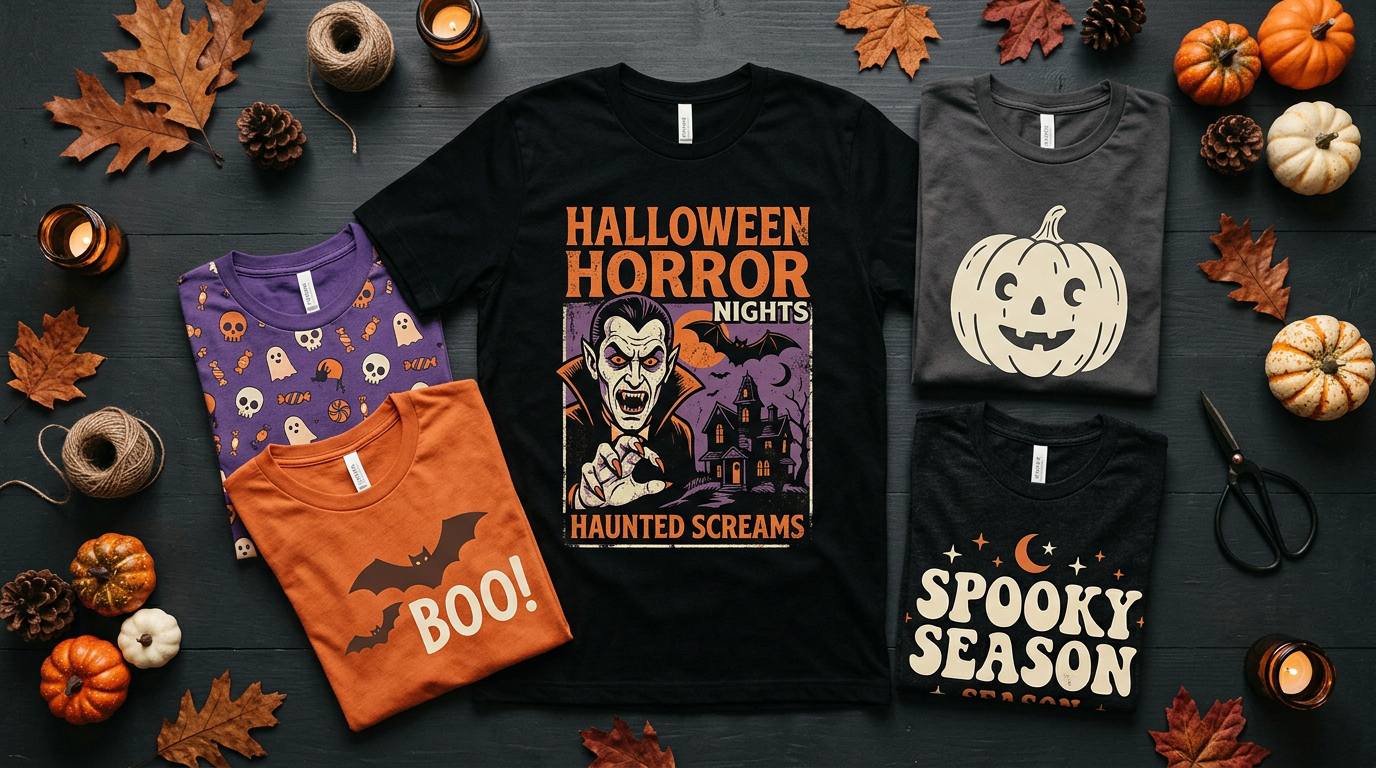
Halloween is the rare moment when shoppers actively want something playful and seasonal on a shirt. They buy it for a party, a pumpkin patch photo, or an office costume that stops short of an actual costume.
That makes October one of the best months to launch a graphic drop. But the window is short, the competition is loud, and a design that feels two weeks late sells nothing. This guide covers the angles that work, the palettes that read as Halloween, and how to plan and market the drop so it lands in time.
Why Halloween Sells for Apparel
Halloween has three qualities that make it commercially strong.
First, it is a fixed date with a long build-up, which means demand is predictable. Second, the theme is playful, so customers buy designs they would never wear in March. Third, it is highly shareable, since people photograph what they wear to parties and events.
The catch is that demand collapses after the 31st. Halloween inventory that does not sell in October becomes dead stock. Plan the drop to open early and close hard.
Design Angles That Convert
Some concepts reliably outperform others. These six cover most of the demand.
Retro horror leans on vintage film-poster styling, distressed textures, and muted palettes. It appeals to adults who want a Halloween shirt that does not look like a costume.
Typography-led designs use a single phrase in strong lettering. They are the easiest to produce and the easiest to read in a photo, which helps when customers share them.
Icon-led minimalism uses one strong symbol, such as a pumpkin, bat, or ghost, with generous negative space. These designs work well on sweatshirts as well as tees.
Seasonal-autumn designs skip horror entirely and lean on pumpkins, leaves, and harvest colours. They sell earlier in the month and to a broader audience.
Spooky-cute designs soften the theme with rounded shapes and friendly faces. They sell to families and to shoppers who want Halloween without the scare.
Finally, occupation and hobby mashups place a pumpkin or ghost inside a familiar context, such as a nurse, teacher, or cyclist motif. These feel personal, and personal designs convert.
Colour Palettes for October
Halloween colour is more flexible than most brands assume.
The classic combination of orange on black reads instantly and photographs well. Purple with black feels slightly more premium and suits retro styling. Bone white on charcoal is quieter and works for minimalist designs. Deep green with cream gives an autumn harvest feel without any horror reference.
Keep the palette to two or three colours. Seasonal prints compete with busy shop pages, so a tight palette helps the design read at thumbnail size. Our overview of design trends for 2026 covers how colour choices affect conversion more broadly.
Print Placement and Product Mix
Placement shapes how a design reads and how it prices.
A centred chest print is the safest and most versatile. Oversized back prints feel premium and justify a higher price. Small left-chest marks suit minimalist concepts and pair well with hoodies. Sleeve prints add a detail that helps a design stand out in photos.
Build the drop around a core tee, then add one or two higher-price items such as a heavyweight sweatshirt. That mix lifts average order value without multiplying your production risk. When you plan the range, treat it as a collection rather than a one-off, which our guide to designing a collection explains.
Print Method and Colour Accuracy
Seasonal designs often use gradients, halftones, and fine linework, and not every method handles those equally.
Screen printing gives the boldest, most durable result for flat colour and suits large runs. Direct to garment handles fine detail and gradients with no setup cost, which suits short seasonal runs. Transfers sit between the two. Our comparison of printing methods explains the trade-offs in detail.
Orange and purple are the two colours most likely to shift during production. Approve a physical sample before the full run, and check the print against your digital mockup under daylight.
Copyright: What You Can and Cannot Use
Halloween attracts legal risk because so much of the imagery is owned by someone.
Film characters, franchise monsters, band logos, and licensed artwork are off limits without a licence, even in a stylised form. Popular slogans associated with specific films carry the same risk. Generic symbols such as pumpkins, ghosts, bats, and skeletons are safe to use in original compositions.
When in doubt, design your own interpretation and avoid anything a customer would recognise as belonging to a specific property. A takedown notice in October costs far more than a cautious design.
Pricing a Seasonal Drop
Seasonal items justify a small premium because availability is limited and timing matters. Keep the price close to your core range, though, so the drop feels like a variation rather than a different brand.
Protect your margin by planning the run size carefully. A tight first run that sells out is a better outcome than leftovers on the 1st of November. If the design performs, restock early in the month, not in the final week.
Launch Timeline
Working backwards from Halloween, the schedule is tighter than most brands expect.
Finalise designs by the first week of September so samples are ready before the end of the month. Open the drop in the last week of September or the first days of October, which gives you four full selling weeks. Push hardest in the middle two weeks, then switch to urgency messaging in the final week with a clear ship-by date.
Marketing the Drop
Short-form video is the strongest channel for a visual seasonal drop. Behind-the-scenes clips of the print process and styling ideas perform well, as our guide to selling through short-form video explains.
Pair that with creators who already make Halloween content. A small group of relevant creators will usually outperform one large general account, which is the logic behind our guide to working with micro-influencers.
The Bottom Line
Halloween rewards speed and specificity. Pick two or three strong angles, keep the palette tight, clear your licensing risk, and open the drop early enough to sell for four weeks.
Then make the products easy to find. Browse our t-shirts to see how a seasonal drop fits alongside your core range.