


Loyalty Programs for Apparel Brands: Rewards That Actually Work
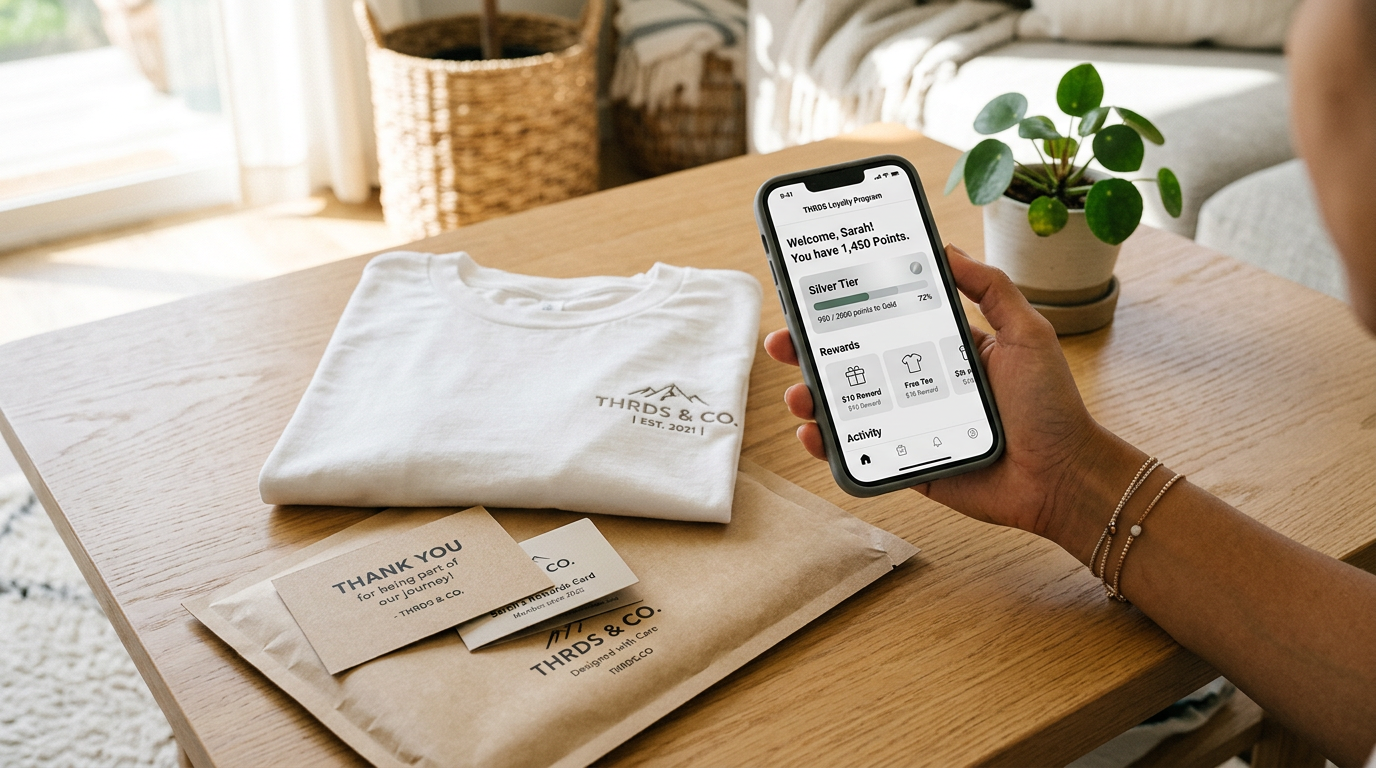
Acquiring a new customer costs several times more than selling to an existing one. That single fact is why loyalty programs exist, and why so many of them fail anyway.
Most programs fail for the same reason. They reward spending in a way that trains customers to wait for discounts, then they wonder why full-price sales disappear. A well-built program does the opposite. It rewards repetition, deepens the relationship, and protects your margin. This guide covers what works, what does not, and how to launch without giving away your profit.
What Loyalty Programs Actually Do
A loyalty program is a system that makes buying again easier and more rewarding than buying elsewhere.
Done well, it lifts repeat purchase rate, grows average order value, and gives you a reason to keep in touch with customers. Done badly, it becomes a discount machine. Customers join, collect a reward, and leave, having paid less than they otherwise would have.
The difference comes down to what you reward. Rewarding a single large purchase attracts bargain hunters. Rewarding a pattern of purchases builds a habit.
Reward the Right Behaviour
Start by deciding which behaviour you want more of, then build backwards from there.
If you want repeat purchases, reward the second and third order more generously than the first. If you want higher order values, add thresholds that unlock at a sensible spend level. If you want referrals, reward the person who brings a new customer, not just the new customer.
Every reward should map to a business outcome. If you cannot name the outcome, drop the reward. Programs get expensive when they accumulate perks nobody asked for.
Five Structures That Work
Not every structure suits every brand. These five are the ones that consistently perform for apparel.
A points program is the most flexible. Customers earn points per dollar and redeem them for credit or product. Points work well because they create an open loop, so customers return to check their balance.
A tiered program adds status. Customers move up levels based on spend or order count and unlock better perks. Tiers suit brands with a clear best-customer segment and a product range that supports repeat buying, such as t-shirts and sweatshirts.
A paid membership charges an annual fee for benefits like free shipping and early access. It works when the fee is obviously worth it, and it generates revenue upfront.
A referral program turns customers into a channel. Both sides get value, and you acquire a customer at a known cost.
Early access is the simplest structure of all. Members see new drops first. It costs nothing in margin and rewards your most engaged buyers.
Points Done Right
Points programs live or die on two numbers: how fast customers earn and how much a point is worth when redeemed.
Set an earn rate that feels generous on a normal order but does not give away too much margin. Then set a redemption value that is easy to understand, such as a fixed number of points for a fixed credit. Avoid complicated conversion tables.
Add a sensible expiry window, long enough to feel fair and short enough to create gentle urgency. Finally, show the balance everywhere it matters, including the order confirmation and your emails. Points customers forget about are points that cost you nothing and change nothing.
Tiers Without Alienating New Customers
Tiers are powerful, but they can make a first-time buyer feel like an outsider.
Keep the entry tier genuinely useful. Give new members something immediate, such as a small welcome reward or free shipping over a threshold. Then make the path upward visible and achievable so it motivates rather than discourages.
Communicate progress clearly. A customer who knows they are one order away from the next tier has a real reason to buy now instead of later.
The Math Behind Paid Membership
A membership fee only works if the promised benefits cost you less than the fee, and if members buy more often than non-members.
Estimate the annual cost of the benefits per member, then compare it to the fee. The gap is your margin. Then check the behaviour difference. If members order more frequently, the program pays for itself twice.
If the math is thin, reduce the benefits rather than raising the fee. A membership that disappoints generates refunds and complaints.
Referrals: Keep It Simple
Referral programs underperform when the reward is confusing or the process takes more than a minute.
Give the referrer a clear reward, give the friend a clear discount, and make sharing a single tap. Track it properly so both rewards land automatically. Then promote it at the moment customers are happiest, which is right after an order arrives. Reviews and referrals reinforce each other, and our guide to turning reviews into sales shows how that compounding works.
Measure It or Drop It
A loyalty program is an investment, so treat it like one and measure it every quarter.
Track repeat purchase rate, average order value for members versus non-members, redemption cost as a share of revenue, and the share of revenue that comes from members. If members behave no differently from everyone else, your program is decoration.
Retention connects directly to the rest of your marketing. A loyalty program amplifies the community you build, works alongside your email flows, and reduces the volume of carts you need to recover through abandoned cart recovery.
The Bottom Line
Reward repetition, not one-time spending. Keep the structure simple enough to explain in one sentence, measure it honestly, and cut whatever does not move repeat purchase rate.
Do that, and loyalty becomes the cheapest growth channel you own, which is exactly what makes scaling a brand sustainable rather than exhausting. Explore our t-shirts to see what your returning customers would come back for.