


Dealing with the Midnight Zoomies: Why Your Cat Goes Crazy at Night
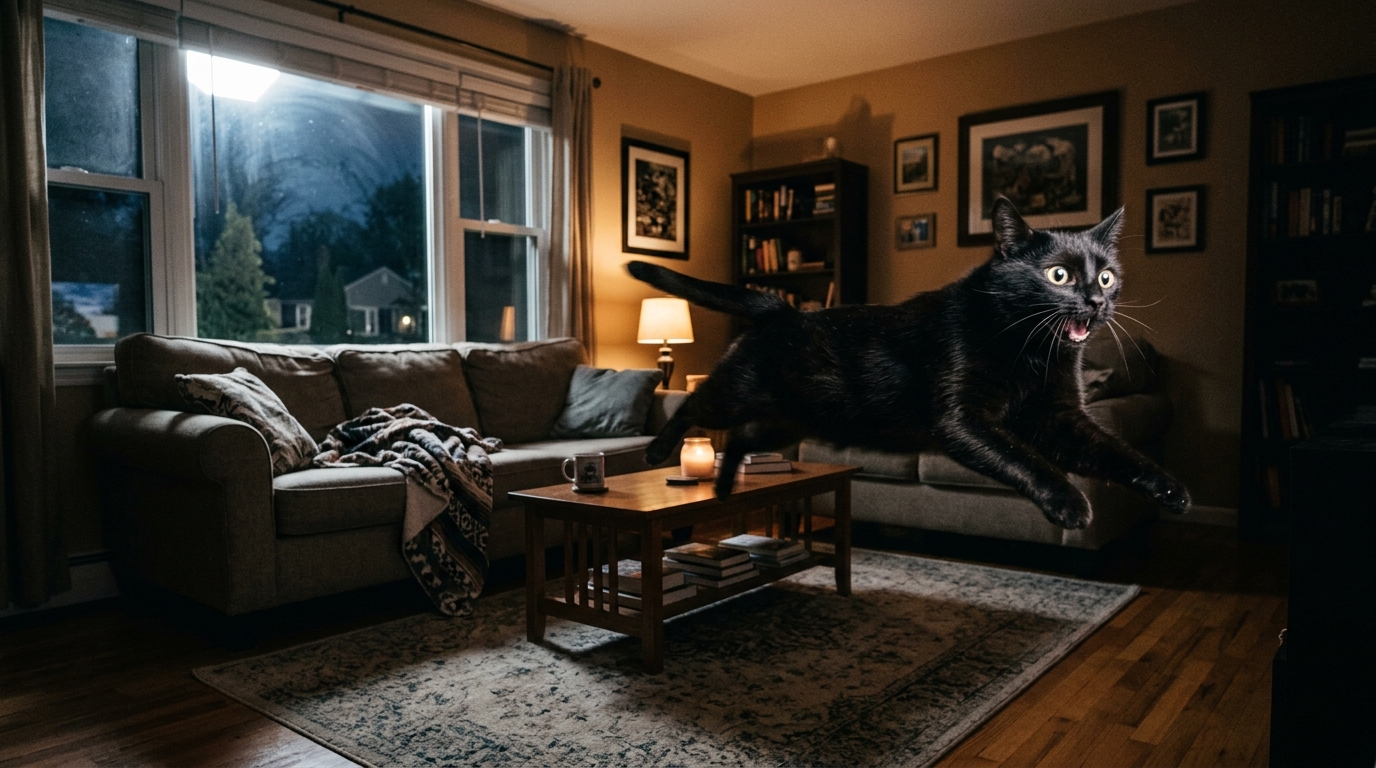
It’s 2:47 AM. You’re deep in REM sleep when suddenly thump-thump-thump-THUMP — what sounds like a tiny horse stampede thunders across your bedroom floor. Your cat ricochets off the wall and disappears into the hallway with a wild-eyed expression. Welcome to the cat midnight zoomies — one of the most bewildering and universal experiences of cat ownership.
If you’ve ever lain awake wondering why do cats run wild at night and specifically at the worst possible time, you’re about to get answers. And more importantly, strategies to reclaim your sleep.
The Science: It’s Not Chaos, It’s Biology
Cats are crepuscular, biologically wired to be most active during twilight hours — dawn and dusk. In the wild, these are prime hunting times. Your cat’s internal clock says 3 AM is “go time.” The problem isn’t your cat — it’s the mismatch between their crepuscular programming and your diurnal sleep schedule.
Pent-Up Energy: The Indoor Cat Problem
A cat who spends the day napping has accumulated a full tank of energy by midnight. Without meaningful physical and mental stimulation during daylight hours, that energy erupts in an explosive late-night release. The more your cat sleeps during the day without stimulation, the more intense the nighttime zoomies will be.
Hunger and the Hunt Cycle
Cats follow a hunt-eat-groom-sleep cycle. The key insight: the “hunt” phase comes before eating. If your cat eats dinner at 6 PM, by 2 AM they’re entering their natural pre-hunt energy surge with no prey to stalk. A well-timed feeding schedule can be transformative.
Is It Medical? When to Worry
Normal zoomies are episodic bursts followed by calm. Medical restlessness is persistent, often with weight changes or increased appetite. If your cat’s nighttime activity feels different from their normal pattern, a vet check is wise.
5 Strategies to Tame the Midnight Madness
1. The Pre-Bed Play Session — Engage your cat in 10–15 minutes of hunt-simulating play with a wand toy, followed by a meal. This triggers the natural hunt-eat-groom-sleep cycle.
2. Environmental Enrichment — Puzzle feeders, window perches with bird feeders, rotating toys, and climbing structures. A cat tree near a window is worth its weight in gold.
3. Feed on Schedule, Feed Before Bed — Move the largest meal to just before your bedtime. A full belly triggers the post-meal sleep sequence.
4. Don’t Reward the Behavior — Getting up to feed, play, or even scold gives attention — and attention is a reward. Ignore the chaos completely.
5. Consider a Feline Friend — Two cats who get along will entertain and tire each other out. It often reduces solo zoomies rather than doubling them.
Making Peace With the Zoom
Understanding why do cats run wild at night changes everything. Once you recognize the midnight zoomies as the natural expression of a crepuscular predator’s energy cycle, you can work with your cat’s biology instead of fighting it.
Has your cat mastered the 3 AM zoomie technique? What’s worked in your household? Share your midnight cat stories in the comments!
And for those evenings when you’re winding down while your cat is winding up, check out our Cat Graphic Design Collection — comfort that looks as good as it feels.