


How to Start a T-Shirt Brand in 2026: A Step-by-Step Beginner's Guide
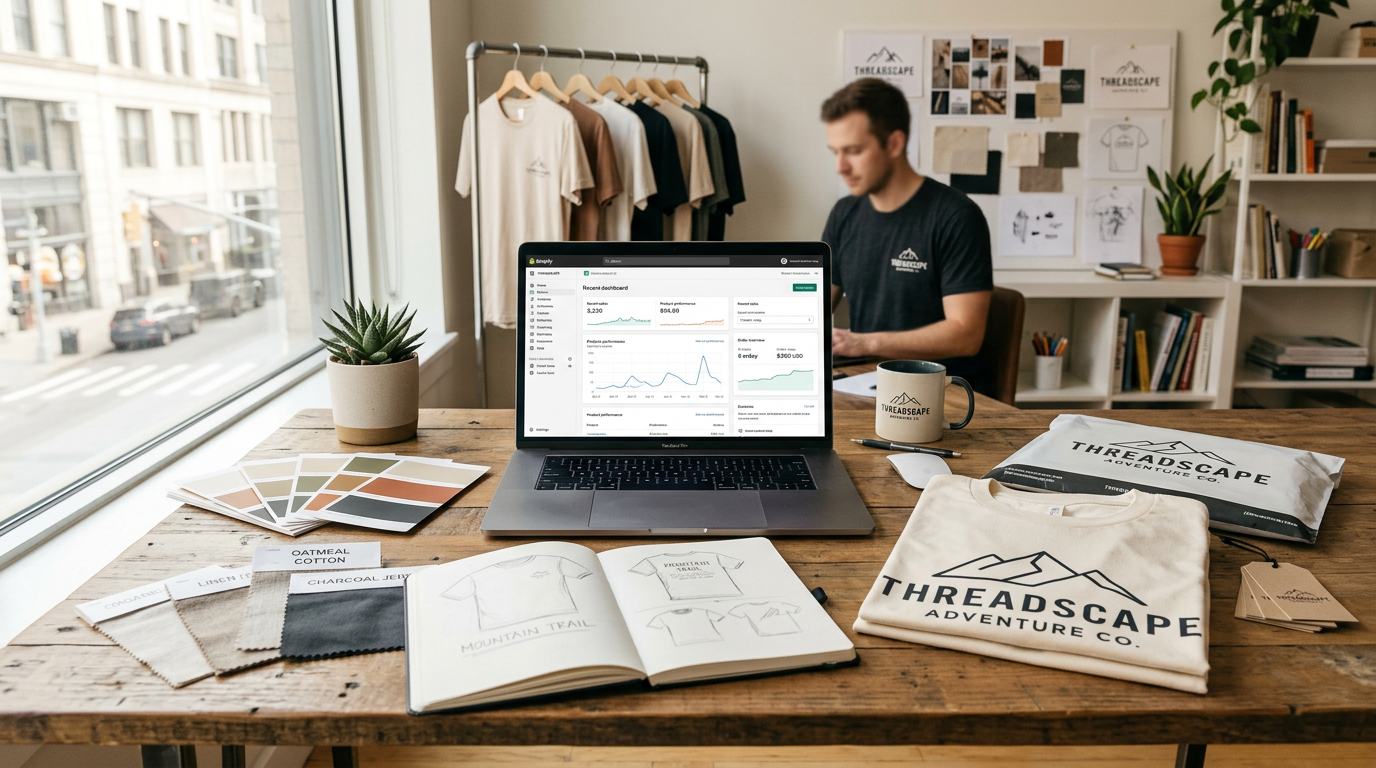
Starting a t-shirt brand in 2026 isn't what it was ten years ago — it's better. Print-on-demand technology, direct-to-garment printing, and social commerce have lowered the barrier to entry while raising the ceiling on what an independent brand can achieve. The barrier isn't capital or connections anymore; it's clarity. This guide walks you through exactly how to start a t-shirt brand in 2026, from the first sketch to the first sale.
Step 1: Find Your Niche — Specificity Sells
The biggest mistake first-time founders make is trying to sell t-shirts to "everyone." A t-shirt business that tries to appeal to all customers appeals to none. The brands that win in 2026 are the ones that own a narrow, passionate niche. Think: t-shirts for cat lovers who appreciate minimalist design. T-shirts for cyclists who want technical fabrics with subtle style. T-shirts for hiking enthusiasts who value eco-friendly materials. Your niche should be specific enough that when someone in that community sees your design, they feel seen — and specific enough that the competition is manageable. Spend time here. The niche is the foundation everything else rests on.
Step 2: Define Your Brand Identity
Before you design a single shirt, define what your brand stands for. What's your brand's personality? What's the emotion someone should feel when they see your logo or wear your product? This isn't fluff — it's the compass for every decision you'll make, from color palettes to Instagram captions. Your brand identity includes your name, logo, color scheme, typography, and most importantly, your brand story. People don't just buy t-shirts in 2026; they buy into identities. Give them something to believe in.
Step 3: Design With Intention
Here's where the rubber meets the road. Your designs need to communicate your brand's identity in a single glance. If you're not a designer, you have options: learn basic design tools like Canva or Figma, hire a freelance designer on platforms like Fiverr or 99designs, or use AI-assisted design tools for concept generation (always with human refinement). The key principle: a great t-shirt design doesn't just look good — it makes the wearer feel like they're part of something. Think about placement (center chest, left chest, full front, back), scale, and how the design interacts with the garment's color and silhouette.
Step 4: Choose Your Production Method
In 2026, you have more production options than ever, and the right choice depends on your budget, scale, and quality goals. Print-on-demand (POD) lets you start with zero inventory — designs are printed and shipped only when ordered. It's the lowest-risk way to learn how to start a clothing brand in 2026. Direct-to-garment (DTG) printing offers high-quality, detailed prints ideal for complex designs. Screen printing delivers the best quality and lowest per-unit cost at scale but requires minimum orders. Cut-and-sew or private label manufacturing gives you complete control over fabric, fit, and branding details. Most successful brands start with POD to validate designs, then transition to screen printing or private label as they scale.
Step 5: Price for Profit
Pricing isn't guesswork — it's math. A simple pricing formula: determine your total cost per unit (product + printing + packaging + shipping), then multiply by 3-5x for retail pricing. A t-shirt that costs you $12 to produce should retail for $36-$60 to cover marketing, platform fees, and leave healthy profit. Don't compete on price — that's a race to the bottom. Compete on design, brand experience, and the emotional connection your products create.
Step 6: Build Your Online Store
Your website is your brand's home. Shopify remains the gold standard for e-commerce in 2026, offering everything you need: beautiful templates, integrated payments, inventory management, and marketing tools. Invest in great product photography — flat lays, model shots, and detail close-ups. Write product descriptions that sell the feeling, not just the features. Make the checkout experience seamless. Your store should feel as premium as the brand you're building.
Step 7: Launch and Market
The launch isn't the finish line — it's the starting gun. Use social media to build anticipation before launch day. Share behind-the-scenes content: design sketches, sample photos, packing videos. Leverage short-form video on TikTok and Instagram Reels — fashion content thrives in video format. Build an email list from day one and treat subscribers like VIPs. Collaborate with micro-influencers whose followers match your niche. And most importantly: launch, learn, iterate. Your first collection won't be perfect, and that's the point. The brands that succeed are the ones that keep going.
Your First T-Shirt Starts Today
Thousands of people dream about starting a clothing brand. The ones who succeed aren't necessarily the most talented or best-funded — they're the ones who start before they feel ready and learn along the way. How to start a t-shirt brand in 2026 isn't a mystery — it's a sequence of decisions, each one taking you closer to something real. Pick your niche, design something you'd wear, and put it out into the world. The rest is iteration.
What's the biggest question holding you back from starting your t-shirt brand? Drop it in the comments — our community and team are here to help.
Ready to bring your brand to life? Explore our T-Shirts Collection for quality blanks and custom design services that turn your vision into wearable reality.