


Wholesale for T-Shirt Brands: How to Land Your First Retail Account
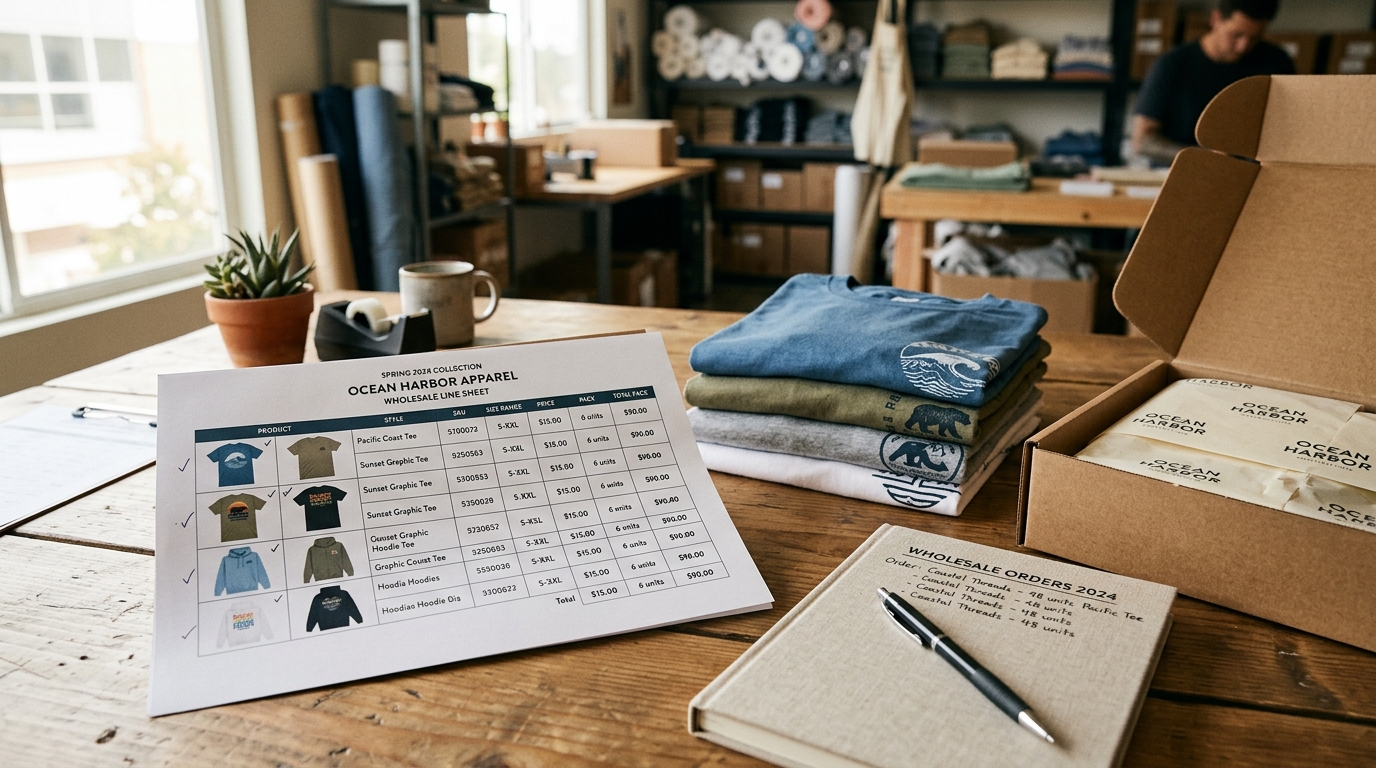
Direct to consumer grows one sale at a time. Wholesale grows by the case. A single retail account can move more units in a month than a year of steady online orders, and the reorders keep coming without new ad spend.
That is the appeal. The catch is that wholesale rewards preparation. Retailers buy from brands that make ordering easy, and they quietly ignore the rest. This guide walks through pricing, the line sheet, terms, sampling, and the outreach that turns a cold email into a first purchase order.
What Wholesale Actually Looks Like
In wholesale, you sell to a store rather than a shopper. That store resells your product at a higher price and keeps the difference.
Because the retailer needs room to profit, your wholesale price is lower than your retail price. The standard arrangement is that they buy at roughly half of the recommended retail price. Your margin per unit shrinks, but your volume and your predictability rise.
Wholesale buyers also behave differently. They care about reliable stock, consistent quality, and simple reordering far more than they care about a clever product page. Selling wholesale is an operations job as much as a marketing one.
Price for Two Customers at Once
The most common wholesale mistake is applying retail margins to a wholesale price. That leaves the retailer no room, and they walk away.
Work backward from the retail price. Decide what a shopper should pay, then set wholesale at about half of it. Confirm that your wholesale price still covers materials, printing, packaging, and shipping while leaving a real margin.
If the math does not work, the problem is usually your production cost, not the retailer. Before you quote anyone, make sure you understand your pricing for profit, because every wholesale conversation depends on it.
Build a Line Sheet Retailers Can Use
A line sheet is your wholesale catalogue in a single document. It should answer every question a buyer has without a follow-up email.
Include your brand name and a short description. Then list each product with a clear photo, the style name, available colours, the size run you offer, the wholesale price per unit, the suggested retail price, and the minimum order quantity. Add your case pack size so buyers know how the goods arrive.
Keep it to a few pages and export it as a clean PDF. A retailer should be able to circle what they want and reply. Confused buyers do not order.
Set Terms That Protect You
Terms are where new brands get hurt. Decide them before the first conversation, not during it.
Your minimum order quantity sets the floor for what is worth fulfilling. Opening order minimums and reorder minimums are often different, and both should be stated plainly. Payment terms matter even more, because wholesale means shipping before full payment in many cases.
Many small brands start with payment upfront or a deposit, then move to net terms once a relationship is proven. State your lead time honestly, including production plus shipping. Then state your return policy for wholesale orders clearly, because it differs from retail.
Prepare a Sample Kit Worth Sending
Retailers buy with their hands. A sample kit is often the deciding factor.
Send a small selection that shows your range without overwhelming them. Include one or two best sellers, a colour variation, and something that demonstrates your print or embroidery quality. Add your line sheet and a short note about why these pieces suit their store.
Before anything ships, run your quality checks properly. Our guide to sample ordering and quality checks covers what to inspect, so a wholesale sample never arrives with a flaw.
Find the Right Retailers, Not the Biggest
Chasing the largest chain first is a common and costly mistake. Big buyers have long lead times, strict compliance, and little patience for a new brand.
Start with stores that already sell to your customer. Independent boutiques, gift shops, museum stores, and local lifestyle shops are often more receptive. Look for shops that carry similar price points and aesthetics, because a mismatch helps nobody.
Make a list of twenty realistic targets rather than two hundred long shots. A focused list gets real follow-up.
Outreach That Gets Replies
Retail buyers are busy, so your first email has to be short and specific.
Open with one line about their store, showing you actually looked at it. Then introduce your brand in a sentence. Explain why your product fits their customers. Attach the line sheet, mention that samples are available, and ask one simple question.
Keep it under a hundred words. Follow up once after a week, then move on. If your product suits their store and your terms are clear, some of them will reply. If your decoration needs differ per account, understanding embroidery versus printing helps you answer their questions confidently, especially for logo goods like polos and caps.
From First Order to Repeat Order
Landing the account is the beginning, not the win. Repeat orders are where wholesale becomes profitable.
Ship on time, every time. Confirm the order in writing, share tracking, and flag any delay before the retailer has to ask. Consistent delivery is what turns a single purchase order into a standing relationship.
Then grow the account carefully. Offer seasonal additions rather than a full new catalogue. Check in before their busy season so they can plan stock in advance. A retailer who trusts your reliability will increase order sizes on their own.
The Bottom Line
Wholesale is less about charm and more about clarity. Price for both customers, build a line sheet that answers questions, set terms you can live with, and approach the right stores with a short, specific email.
Do that consistently, and your first retail account becomes a repeat customer with predictable volume. Browse our t-shirts to see our range, or get in touch about bulk and custom orders and we will walk you through quantities and lead times.