


The Complete Sizing and Fit Guide for Graphic Apparel Brands
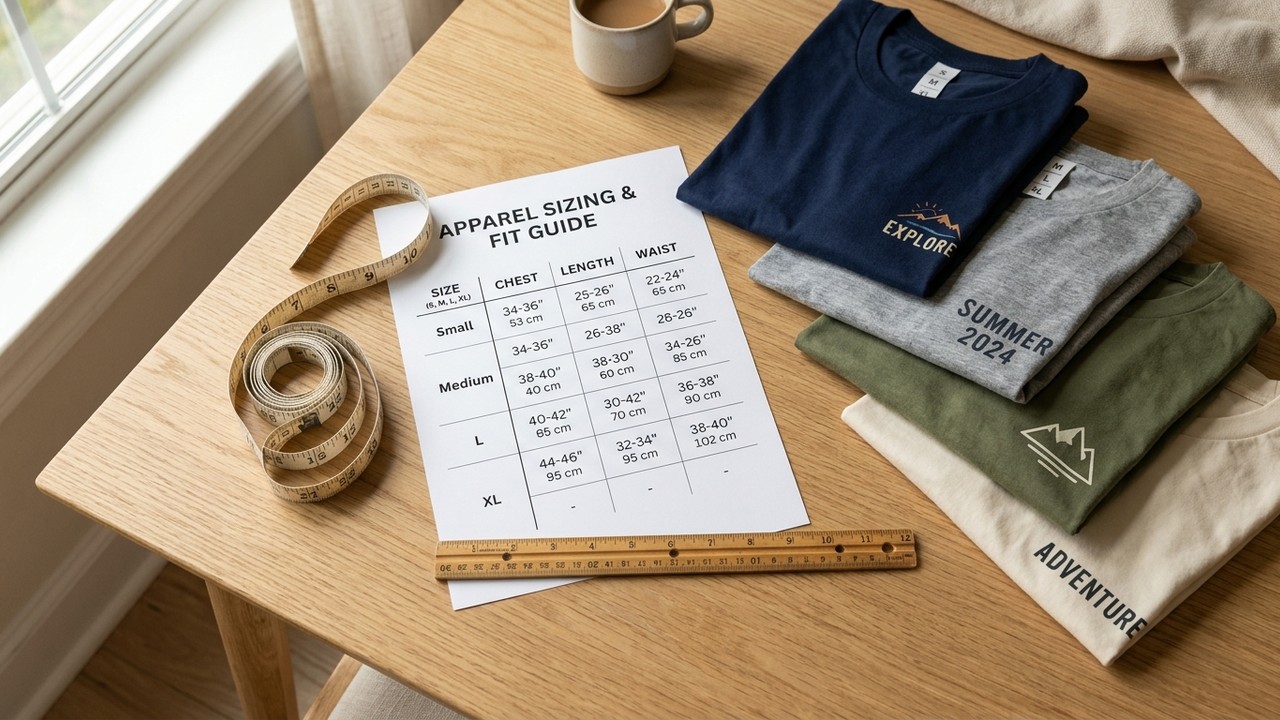
Fit is the quietest reason a customer keeps a shirt or sends it back. A great graphic on a poorly fitted garment becomes a return. The same graphic on a garment that fits becomes a favorite.
This guide explains how sizing actually works on both sides of the transaction. If you are a shopper, you will learn to measure yourself and read any size chart with confidence. If you run a brand, you will learn to build a size run and communicate fit so returns drop.
Start With Your Own Measurements
Your usual size label is a weak guide, because it means different things in different brands. Your body measurements are constant, so start there.
Measure four things. Chest width, taken around the fullest part with the tape level. Body length, from the highest point of the shoulder to where you want the hem to sit. Shoulder width, across the back from seam to seam. Sleeve length, from the shoulder seam to the end of the sleeve.
Wear a fitted shirt while measuring and keep the tape snug but not tight. Write the numbers down. Every size chart you meet from now on becomes readable.
How to Read a Size Chart Properly
Size charts usually list garment measurements, not body measurements. That distinction causes most confusion.
A garment measurement describes the physical shirt lying flat. If the chart says the chest is twenty-two inches, that is the width of the garment, measured from armpit to armpit, not the distance around your body.
To compare, take a shirt you already own and love. Lay it flat and measure it the same way the chart measures. Then match those numbers to the chart. This method beats guessing every time, because it uses a garment you can actually see on your body.
Also check whether the chart refers to half chest or full chest. The numbers differ by double, and brands are not always explicit about which convention they use.
Fit Vocabulary: What the Words Mean
Fit names are marketing language until you define them. Here is what each usually means in practice.
Classic fit sits close to the body with moderate room and a standard shoulder seam. Relaxed fit adds volume through the chest and body while keeping shoulders roughly in place. Oversized fit adds room everywhere and often drops the shoulder seam below the natural shoulder. Slim fit tapers through the waist and chest.
None of these is better. They simply suit different bodies and different styling goals. The mistake is assuming that a size up automatically equals a relaxed fit, because it changes length as well as width.
Why Fabric Changes How Fit Feels
Two garments with identical measurements can feel completely different. Fabric weight and stretch explain most of that gap.
Heavier fabric holds structure and drapes less closely, which reads as more premium but can feel boxier. Lighter fabric follows the body more closely and feels cooler. If you are choosing base materials, our guide to the best fabrics for a premium brand explains how fibre and weight interact.
Fleece behaves differently again. A sweatshirt or hoodie with the same chest measurement will feel bulkier than a t-shirt, because the fabric is thicker and the ribbed trims pull the shape inward.
Plan for Shrinkage
Cotton moves after the first wash. Ignoring that fact is how a perfectly fitted sample becomes a short, tight shirt three weeks later.
Ask your supplier about shrinkage rates for the specific fabric, and whether the garment is pre-shrunk. Then wash your sample the way a customer would, following the care instructions, and measure it again afterward. That number, not the original spec, is what your customers will experience.
Build this step into your sample and quality checklist so every new fabric is tested before it reaches production.
Fit and Graphic Placement
Print area and fit are connected, and brands rarely plan them together.
A wider garment gives you more horizontal space for a large print, but an oversized body can make that same print look small. A slimmer garment needs a tighter, higher placement so the design does not distort across the chest.
Test your artwork on a physical garment in each size in your run. A design that reads well on a medium can sit awkwardly on a double extra large, because the neckline drops and the chest widens. Approve the placement per size, not just on one sample.
Build a Size Run That Serves Real Bodies
Many brands carry a narrow run and then wonder why customers ask for more options. Returns and exchanges tell you exactly which sizes are missing.
Review your exchange data and note which sizes customers request most. Then weigh the cost of carrying more sizes against the sales you gain and the returns you avoid. Stocking depth matters too, since running out of the middle sizes is the fastest way to lose a sale you already earned.
Communicate Fit So Returns Drop
Good fit information prevents returns before they happen. Most shoppers do not want to send things back, so help them choose correctly.
Show your size chart clearly and link it from the product page rather than burying it in a footer. Add fit notes for each product, such as whether it runs true to size or roomy. Include customer reviews that mention sizing, since shoppers trust peers more than copy.
Fit doubts also drive cart abandonment. When customers hesitate over size, they often leave without buying at all, which is why a clear guide pairs well with a solid abandoned cart recovery process.
The Bottom Line
Sizing stops being confusing once you separate body measurements from garment measurements. Measure yourself, measure a shirt you already love, and compare those numbers against the chart.
If you run a brand, take the same care. Test shrinkage, check print placement in every size, and publish fit information honestly. Customers notice that effort, and they reward it with fewer returns and more repeat orders. Browse our t-shirts and sweatshirts to see how we apply this thinking, or reach out and we will help you plan a size run that fits real customers.